Welcome to the ENETWILD Newsletter!
ENETWILD is an international network of wildlife professionals focused on integrating wildlife management with the surveillance and management of pathogens. The project is funded by EFSA.
In this newsletter, you will stay in the loop on the latest publications and updates in the wildlife world, have access to event information and get to know more about the people involved in the project.
As in previous editions, there’s a reward for reading this newsletter through to the end: the “Find the Mammal” game awaits you
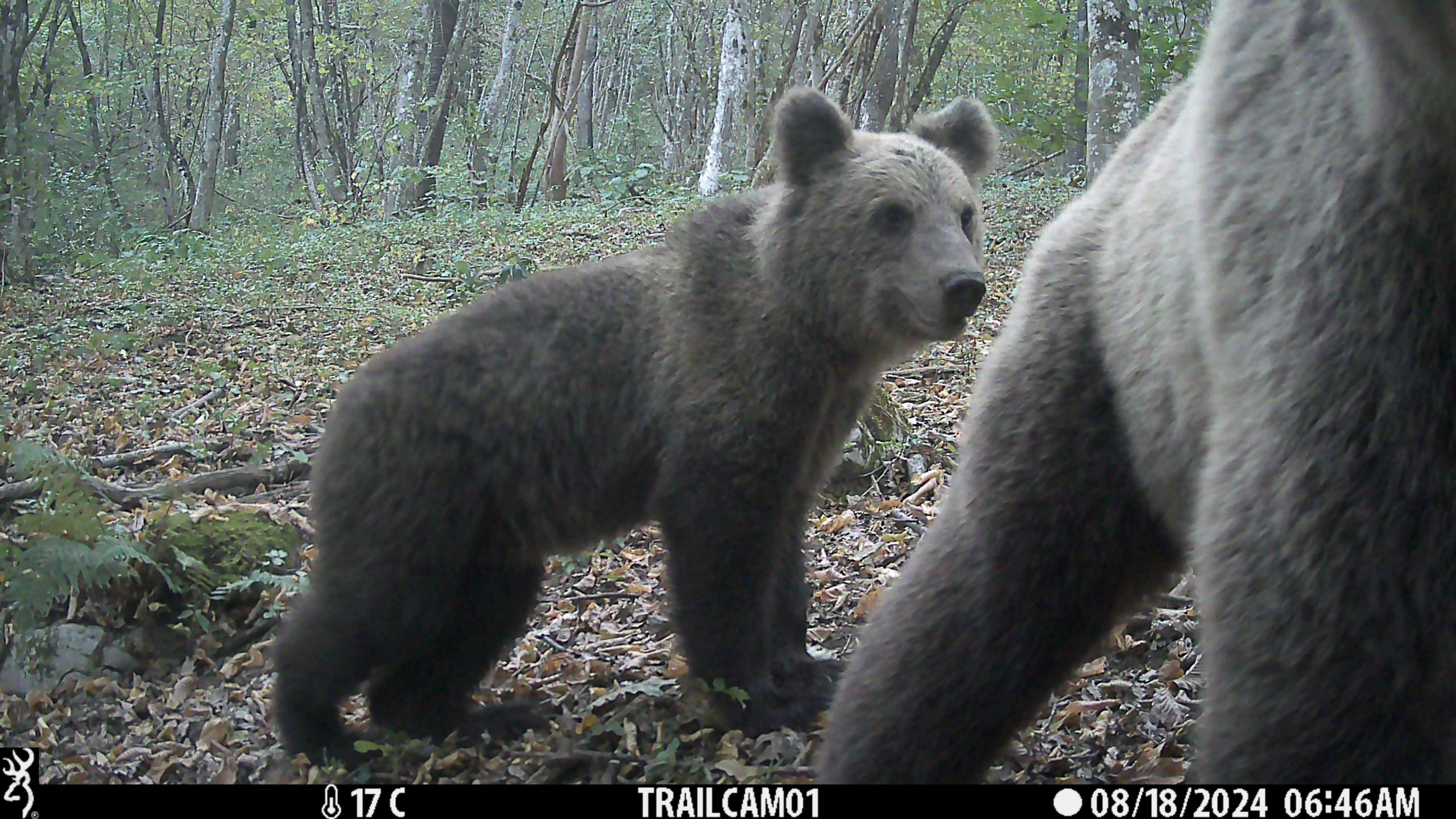
Taken with a camera trap. Shows a brown bear cub in Slovenia. Photo credit: Faculty of Environmental Protection.
Latest publications
Wild boar and African swine fever: How large should restricted zones be?
First high-resolution European map of wild boar density
https://www.irec.es/en/publicaciones-destacadas/primer-mapa-europeo-alta-resolucion-densidad-jabali
What do Spanish hunters think about scavengers?
https://www.irec.es/en/publicaciones-destacadas/percepcion-cazadores-espanoles-carroneros
Opportunity to contribute to the Snapshot Europe database
EOW collaborators have the opportunity to give even greater value to the data collected through the network by contributing to the Snapshot Europe Initiative.
How to contribute
Data can be shared using the standardised Agouti export in camtrapDP format, with no need to re-upload or re-annotate images in Wildlife Insights. Use the buttons below to access the dedicated R script, which allows you to quickly check and correct your Agouti export file and adapt it to the Snapshot aims, and the submission form.
By taking part, you will support an important European collaboration and be invited to join the Snapshot Europe 2025 data paper as a co-author.
Updates
Explore the New EOW Interactive Map
The EOW interactive map has been completely redesigned to offer a more intuitive, user-friendly, and effective browsing experience, allowing users to filter by different features and to visualise comprehensive information about each study site.
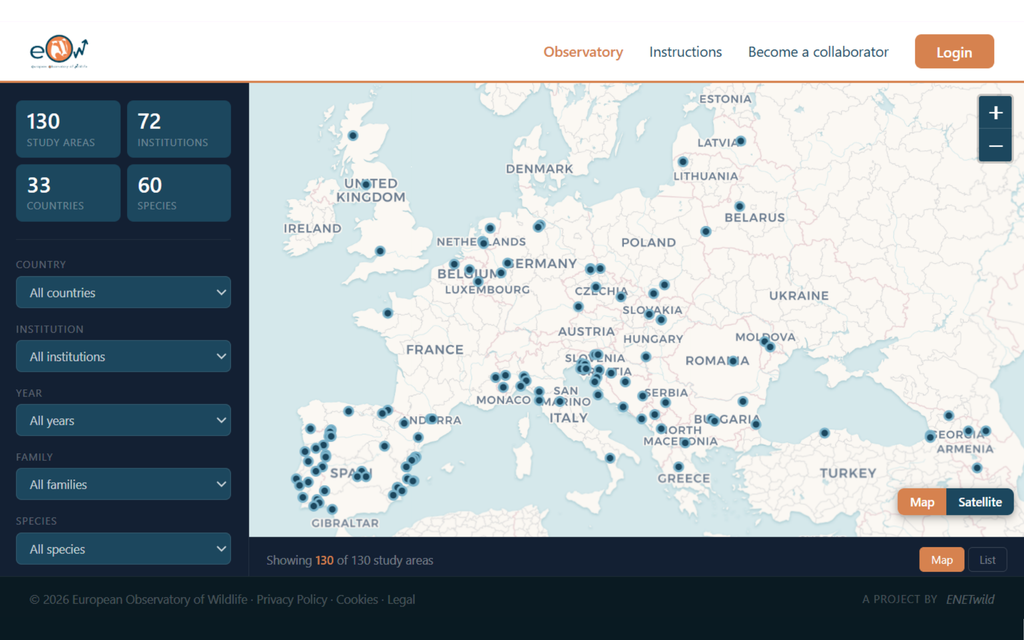
The new map is already available online and ready to explore. Combined with last year’s renewal of the EOW website, this update marks an important step forward in showcasing the EOW network, its study sites, and its activities in a clearer, more accessible, and engaging way.
Call for Data Contributions: Paper on Apex Predators and Ungulate Group Size
EOW collaborators are invited to contribute to a paper proposed by the BigPicture network on the effects of apex predators on ungulate group sizes. The study aims to use existing camera-trap data collected by ENETWILD, EOW, Euromammals and BigPicture partners.
At this stage, only data on red deer, roe deer and wild boar are being collected.
Camera-Trap Requirements
Datasets should include:
- At least 10 camera-trap locations per study area.
- Infrared-flash cameras with a trigger speed of ≤0.5 seconds and/or rapid bursts of at least three images per trigger.
- Cameras placed approximately 50 cm above ground and at least 200 m apart.
- Systematic or random sampling designs, excluding cameras placed on trails, at feeding stations, near carcasses or at other baited sites.
- At least four weeks of monitoring.
Data are welcome from all European countries and from any context, with or without large carnivores.
Data Format
Tagged images or image series should be provided, ideally in camtrapDP format, with the following tags:
- Species
- Group size for red deer, roe deer and wild boar
- Sex*
- Age class*, for example under or over one year old
*Not mandatory, but desirable.
To participate, contact Joe Premier at joe.premier@npv-bw.bayern.de.
2nd EOW Training Workshop 2026
The second EOW Training Workshop of 2026 is scheduled for 18 September and will focus on image processing on the Agouti platform and data analysis. The programme will cover:
- Agouti platform
- Creation and management of projects
- Sequence annotation
- Sequence digitisation
- Data analysis
The course will strengthen ENETWILD collaboration, data quality, and consistent protocol use. This edition will also introduce an official badge recognising participants’ skills and contributions.
The recording of the second EOW Training Workshop of 2026 will also be published and shared in the autumn newsletter.
If you missed the first 2026 EOW Training Workshop, you can watch the full recording here:
Upcoming events
14th International Symposium on Wild Boar and Other Suids
The symposium will take place in Zagreb from 9 to 11 September 2026 under the theme “Rooting towards the Future.”
The event will address African swine fever and other diseases, biology and genetics, ecology and behaviour, and human–wildlife interactions and management policies. Researchers, experts, managers and others interested in suids are invited to take part.
EOW will contribute to the symposium with a poster entitled “The European Observatory of Wildlife: continental-scale wildlife monitoring.”
16th EWDA Conference
The 16th European Wildlife Disease Association Conference will take place from the 29th of September to the 3rd of October 2026 in Novi Sad, Serbia, hosted by the Scientific Veterinary Institute ‘Novi Sad’.
Under the theme “The Wild Future: Challenges of Integrating Health, Welfare and Biodiversity,” EWDA 2026 will bring together experts from wildlife, animal, human and environmental health. The programme will promote research exchange and collaboration on wildlife disease and ecosystem health.
Pre-Conference Workshops will be held on 28 September 2026.
Several contributions from ENETWILD will be presented during the conference, showcasing ongoing work, recent findings, and collaborative efforts within the network.
1st EUP AH&W Scientific Conference on Animal Health & Welfare
The first EUP AH&W Scientific Conference on Animal Health & Welfare will take place in Milan from 19 to 22 January 2027, co-hosted by the University of Milan.
The conference will cover topics including surveillance and monitoring, risk assessment, diagnostics, disease prevention and treatment, vaccines, animal welfare during farming and transport, and integrated approaches that consider socio-economic aspects.
Abstract submission will open soon, with opportunities for both oral and poster presentations for established and early-career researchers.
Interview
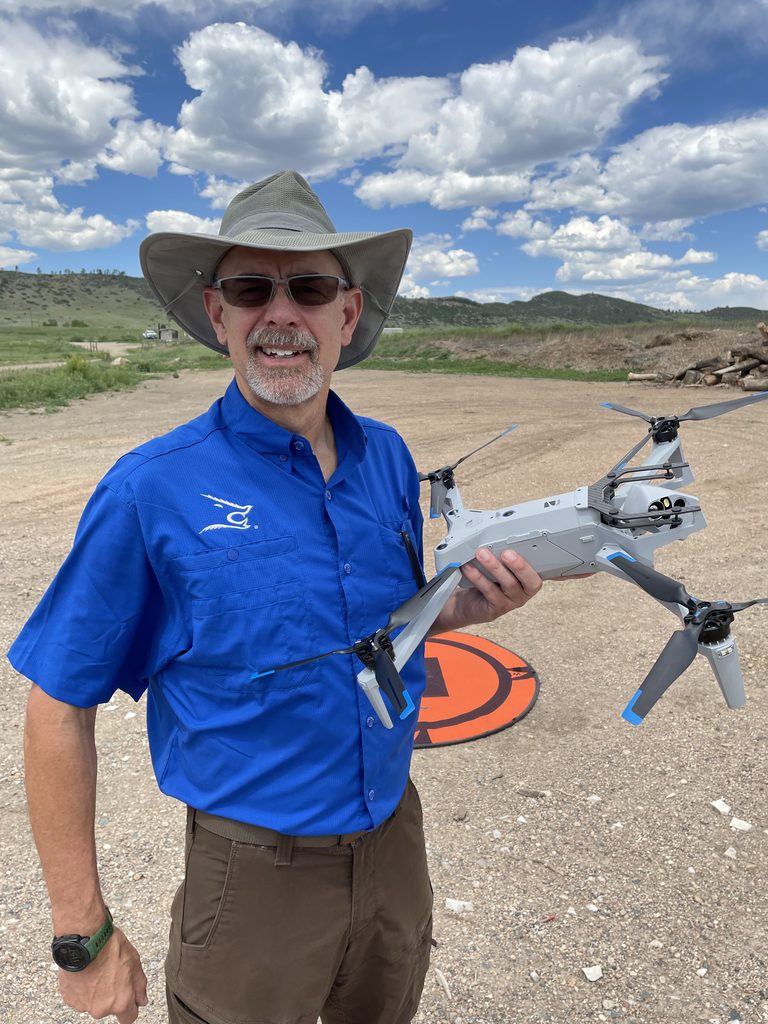
Discover our interview with Kurt VerCauteren, a Supervisory Research Wildlife Biologist at the USDA National Wildlife Research Center in North America, specializing in wildlife conflicts affecting livestock and crops.
Could you start by telling us a bit about your role on the ENETWILD Advisory Board and which expertise you bring that are functional to the Consortium?
Being outside of Europe and a member of the Advisory Board, my role includes providing an outside perspective and any knowledge I can share relative to how similar topics ENETWILD is focusing on have or are being addressed elsewhere in the world. I can also provide aid with implementing new technologies and strategies that have proven useful dealing with similar issues we face in North America.
From your advisory perspective, what are ENETWILD’s most significant achievements to date?
Quite impressively, starting with wild boar, in a short amount of time ENETWILD has effectively coordinated and harmonized data collection across much of Europe. By guiding and facilitating the collection of information on wildlife populations and diseases an extensive and powerful network of collaborators working toward harmonized goals has been established. This initial effort now serves as a model for other species and disease situations. These efforts can also be used as a foundation to gauge how progress is being made in addressing boar populations and problems they cause.
Looking forward, what are the biggest emerging challenges for wildlife health worldwide?
Some emerging challenges in wildlife health worldwide relate to existing and emerging diseases among humans, livestock and wildlife. It seems these sorts of issues are developing more frequently due to anthropogenic reasons. It is our responsibility to competently and effectively prevent new crises from developing and squelching them when they do.
“Global connectedness, international trade and movements of people, plants and animals all play a role. Better and additional surveillance strategies and mitigation tools are needed to address the diseases wildlife play a role in. ”
What are the key lessons from recent emergencies, like Avian Influenza (HPAI) in mammals or African Swine fever?
Recent emergencies highlight the importance of the One Health approach and focus on the importance of monitoring for disease in wildlife. Recent emergencies focus on the importance of learning how to allow human product movements worldwide while reducing/eliminating the movement of pathogens, disease, and nonnative species. Robust surveillance protocols must be in place so if pathogens/disease/nonnative species are introduced into wildlife it is detected and addressed quickly. Further, we have learned repeatedly that diseases in particular are dynamic and adapting where endemic, and may not behave the same way as they have previously when introduced into a new environment. Additionally, we have learned the importance of occasional long-range movements of wildlife or insects that serve as disease vectors and the role that can play.
On a broad scale, what current initiatives or efforts do you believe are contributing most effectively to advance wildlife health?
The increased degree of coordinated and collaborative research has been paramount. It is great to see scientists with differing expertise to include ecology, disease dynamics, quantitative modelling, human dimensions, economics, wildlife, veterinary medicine, and human health, all leveraging their experience and expertise. In addition, these experts are developing and employing new technologies and tools to address their needs. I particularly love the citizen science aspects of ENETWILD – enlisting hunters, wildlife watchers and those employing camera traps to play active roles in helping the cause.
“The establishment of continent-wide collaboration and coordination is monumental.”
What should be ENETWILD’s main contribution to tackling future challenges?
Current efforts help ENETWILD provide an excellent foundation to address next challenges. By expanding to include additional wildlife species and guilds of species, ENETWILD partners have the potential to proactively prepare for future interface conflict issues. A large network of leaders and collaborators are now working together, and can serve to guide and assist experts on next challenges that will inevitably emerge, helping ensure effective and efficient response. In addition, the current structure clearly recognizes how valuable it is to have the same data collection strategies and methods employed so information from various locations can be scaled up across regions.
In the end, what is the main legacy you hope ENETWILD will accomplish?
ENETWILD will serve as a model for the rest of the world on how to address wildlife in a One Health context. The ENETWILD wild boar example of standardizing methods and data collection across regions and countries to allow scaling up for meta-analyses and data interpretation will serve to guide and inform many related efforts relative to a wide variety of different species and diseases. This will lead to better results and more useful science thus providing the knowledge needed to inform future management and policy.
Is there a final message you would like to highlight for our readers?
Recognizing and addressing the wildlife component of interface and One Health issues is absolutely jugular but to date has often been under appreciated. One Health is often described as a three-legged stool where the sustainable environment is supported by wildlife health, livestock health, and human health. This is a fine metaphor but it’s important to realize that the wildlife leg supports the most weight as it is the most influential driver of system health in many cases.
Many thanks for your answers.
Let’s play “FIND THE MAMMAL”!
Reached the end? Your reward awaits. Let’s play!
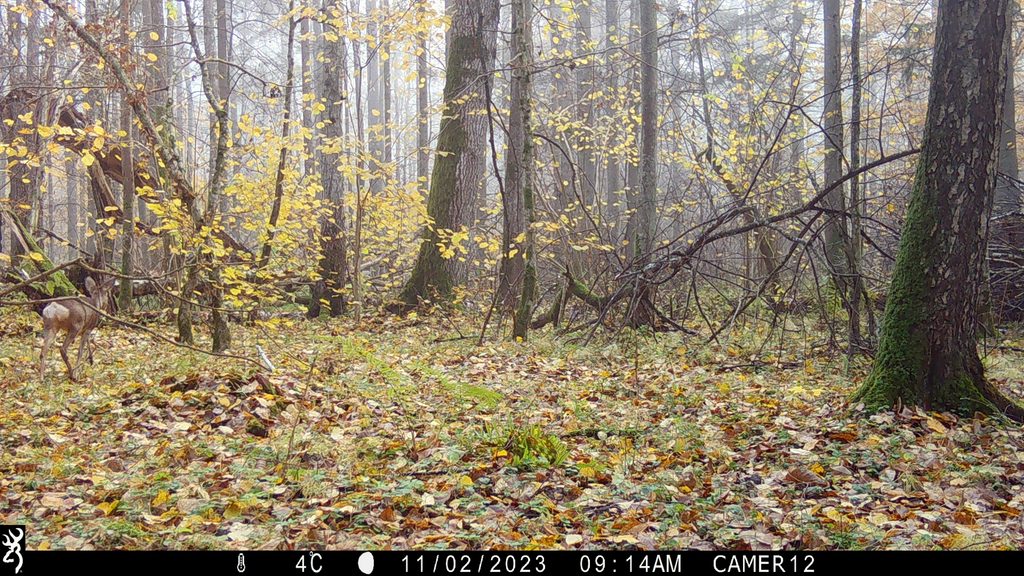
Taken with camera. Shows a European roe deer (Capreolus capreolus) in Białowieża Forest.
Photo credit: MRI PAS, European Observatory of Wildlife (EOW).