Welcome to the ENETWILD Newsletter!
We hope you had a wonderful holiday season! As we start the new year, we look forward to sharing more exciting updates from our projects.
ENETWILD is an international network of wildlife professionals focused on integrating wildlife management with pathogens’ surveillance and management. The project is funded by EFSA.
In this newsletter you will stay in the loop on the latest publications and updates in the wildlife world, you will have access to event information and will get to know more about the people involved in the project.
In this edition, (again) reading the newsletter all the way to its end has a reward: you will find the “Find the Mammal” game 🎯🎯
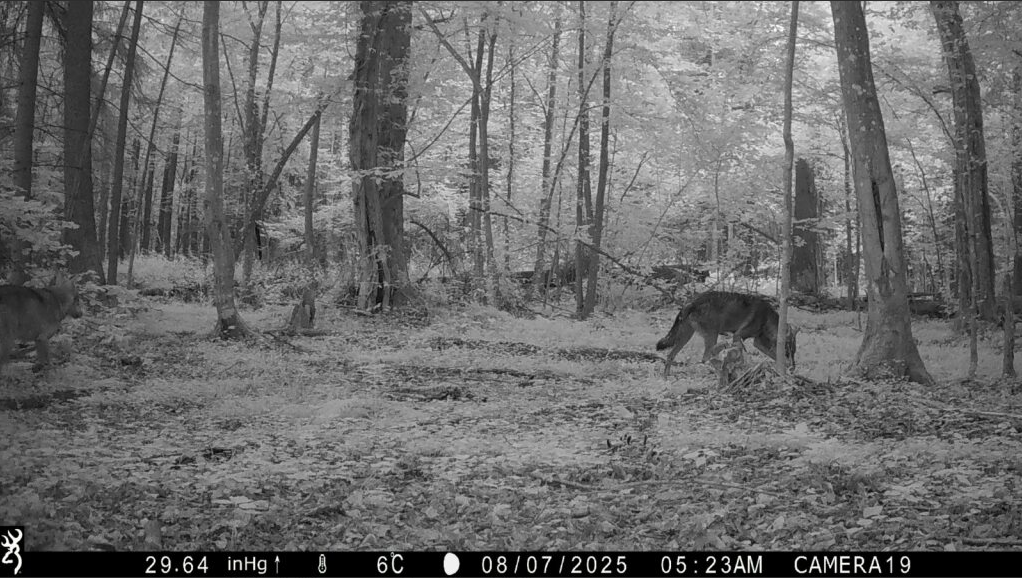
Photo credit: MRI PAS, European Observatory of Wildlife (EOW).
Recap of 2025 publications
Avian influenza spreads among vultures in Spain and France
https://www.irec.es/en/publicaciones-destacadas/gripe-aviar-propaga-buitres-espana-y-francia/
The need to regulate lead in game meat
https://www.irec.es/en/publicaciones-destacadas/necesidad-regular-plomo-carne-de-caza/
Rabbits on the road: Disentangling the factors driving the warren’s abundance on motorways
https://www.irec.es/en/publicaciones-destacadas/factores-proliferacion-madrigueras-conejo-autovias
Rabbits and hares: possible key role in leishmaniasis
https://www.irec.es/en/publicaciones-destacadas/conejos-y-liebres-papel-clave-leishmaniosis/
Can we estimate the abundance of wildlife from its distribution and certain environmental characteristics?
https://www.irec.es/en/publicaciones-destacadas/estimar-abundancia-fauna-distribucion-y-caracteristicas-ambientales
Environmental factors that favor mosquitoes that transmit the West Nile fever virus
https://www.irec.es/en/publicaciones-destacadas/factores-ambientales-favorecen-mosquitos-virus-de-la-fiebre-del-nilo-occidental/
Epidemiological analysis of African swine fever in the European Union during 2024
https://doi.org/10.2903/j.efsa.2025.9436
Contact between soft tick vectors of African swine fever virus and invasive wild pigs in the southeastern USA
https://doi.org/10.1186/s13071-025-06811-1
From field to database: a review of practices of hunting bag data collection, obstacles and solutions across European countries
https://zenodo.org/records/16281457
Become a key collaborator of the European Observatory of Wildlife!
The European Observatory of Wildlife (EOW) invites you to join its collaborative network. By becoming a collaborator, you contribute to a cutting-edge, standardised methodology for European wildlife management and research and gain valuable professional advantages.
Full Protocol Training
Receive comprehensive training in the camera-trapping protocol for estimating wildlife population densities, empowering you to manage each step—from study design to data analysis—autonomously.
Constant Support
The EOW Team provides expert support throughout the protocol implementation, ensuring your queries are promptly answered and potential mistakes are quickly addressed.
Impactful Contribution to EFSA
Contribute high-quality data using a standardised methodology that will be adopted by the European Food Safety Authority (EFSA) for risk assessment.
Scientific Collaboration
Ensure your participation in the network’s consistent collaborative scientific production, with the opportunity to propose research topics and participate to collaborative research.
Networking Opportunities
Gain access to exclusive EOW workshops, webinars, and other initiatives, fostering collaboration and knowledge-sharing across Europe.
Do not miss this opportunity to advance your expertise and play a vital role in the future of European wildlife surveillance!
Updates
Update on the activity of the European Observatory of Wildlife (EOW) – campaign 2024
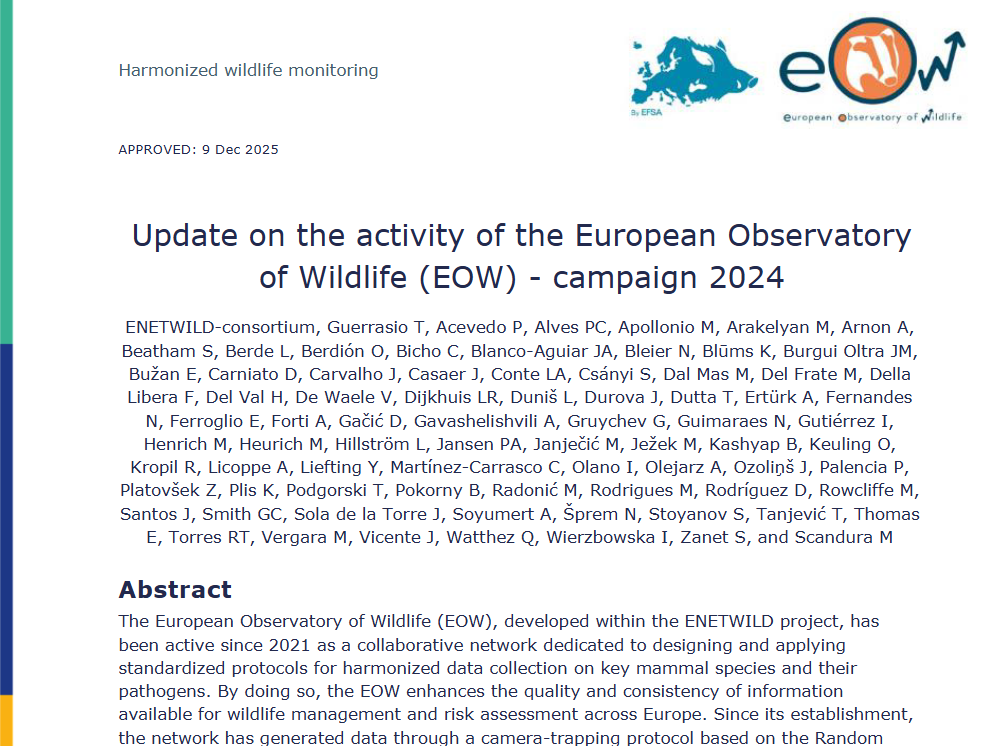
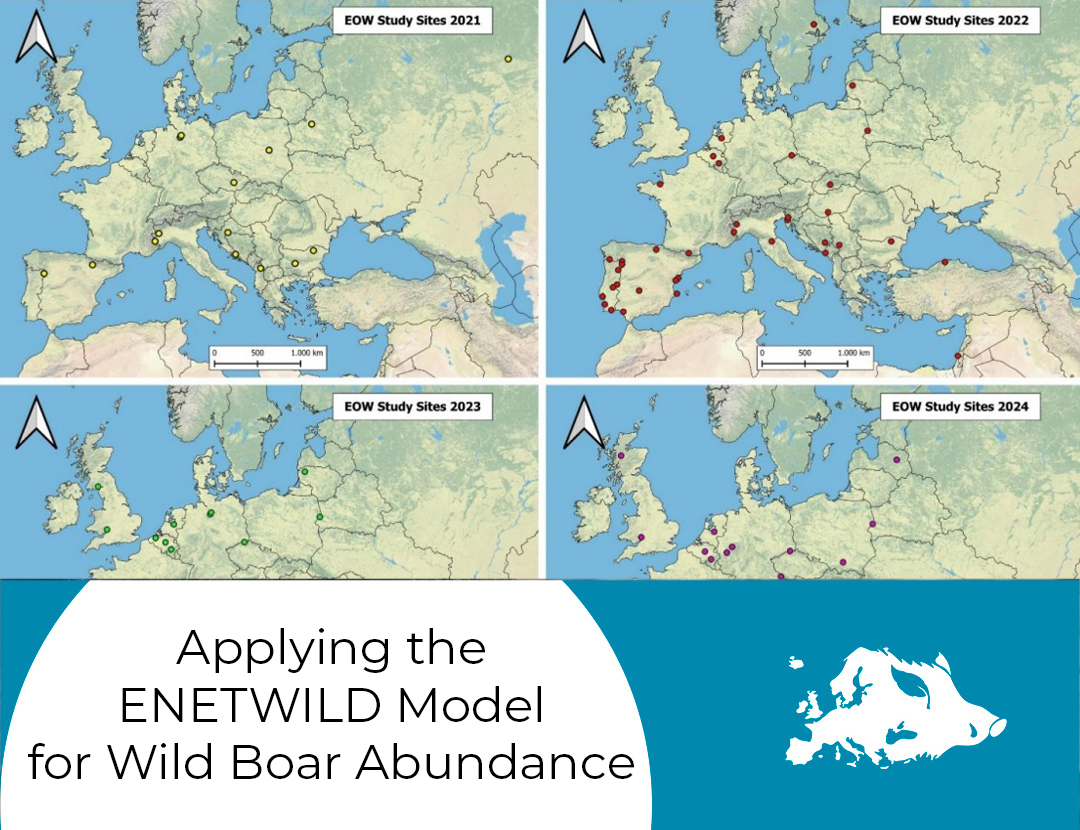
The European Observatory of Wildlife (EOW), a collaborative ENETWILD network, successfully concluded its 2024 campaign, which monitored 58 sites across 23 European countries using standardised protocols. The effort produced density estimates for five key species: wild boar, European roe deer, red fox, red deer, and European badger. The report highlights the network’s expansion into African Swine Fever (ASF)-affected areas and announces the creation of the open-access EOW database, which contains all REM-based density estimates. This resource significantly enhances the quality and consistency of information available for European wildlife management and risk assessment.
Leuven camera trap wildlife & human interaction dataset
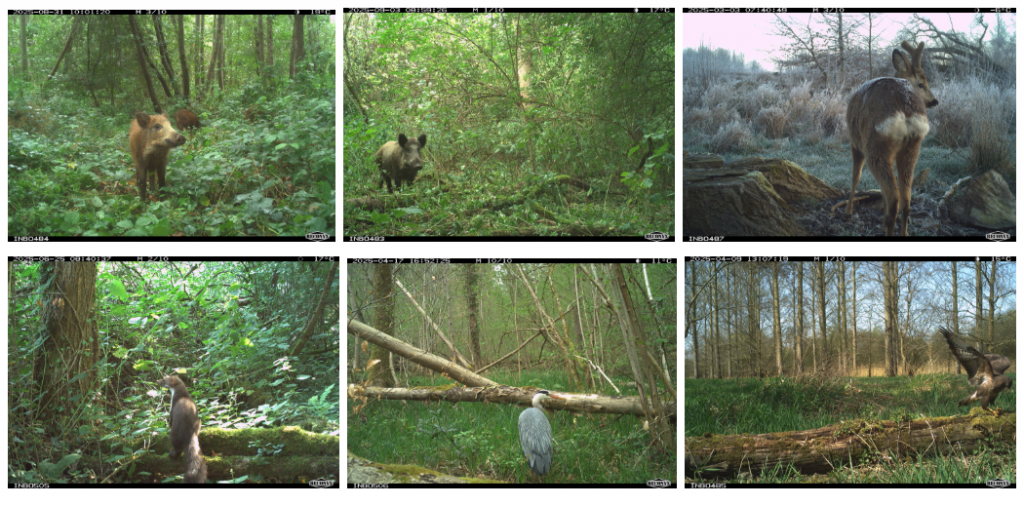
INBO recently published a dataset of one of the sites belonging to the European Observatory of Wildlife (EOW). The published dataset contains camera trap data collected in natural habitats south of Leuven (Belgium), primarily collected to monitor the interaction between human activities (e.g. recreation, hunting) and the population dynamics as well as geographical and temporal distribution of roe deer and wild boar. The dataset also includes all recorded observations of mammals and birds captured during the monitoring period. Finally the dataset contains all the data collected within the framework of the EOW to calculate annual densities of mammal species present, based on the Random Encounter Model.
Monitoring started in March 2018 and was conducted in close collaboration with hunters and members of local nature conservation associations active in the area. The sampling design was based on a grid of 250 x 250 metre cells. A total of 32 camera traps were used. These were relocated monthly, with each selected grid cell being monitored once during the winter and once during the summer. Images from the camera traps were uploaded to Agouti for data annotation.
This dataset was collected using infrastructure managed by INBO and funded by the Research Foundation – Flanders (FWO) as part of Belgium’s contribution to LifeWatch, and in collaboration with the ENETWILD-project and the European Observatory for Wildlife. We hope to publish many more datasets of study sites of the EOW in order to make these data available for research projects. Explore the dataset on the Global Biodiversity Information Facility (GBIF).
The human “Super Predator” – a worldwide discussion
A recent publication by one of our ENETWILD partners from the Mammal Research Institute has captured global attention by highlighting a key finding from camera trap data: wolves and their prey exhibit a profound fear of the human “super predator.”
The research indicates that human activity dramatically shapes the behaviour of wildlife, with wolves, in particular, fleeing the sound of human presence more readily than other threats like dogs. This work contributes a crucial perspective to the study of human-wildlife interaction within the European Observatory of Wildlife (EOW) framework.
Wild boar movement study to inform ASF control
Tomasz Podgórski is leading a critical activity to quantify wild boar movements and social contact parameters most relevant for African Swine Fever (ASF) control, aiming to provide the European Food Safety Authority (EFSA) with harmonised, data-driven estimates. In 2025, the team finalised the identification of key metrics – such as range size and contact rates – using GPS telemetry data from the EUROBOAR platform, resulting in a pan-European synthesis and a reusable methodological framework. This output strengthens the evidence base for designing crucial biosecurity and surveillance measures. The analysis will be completed and the open-access report will be available soon.
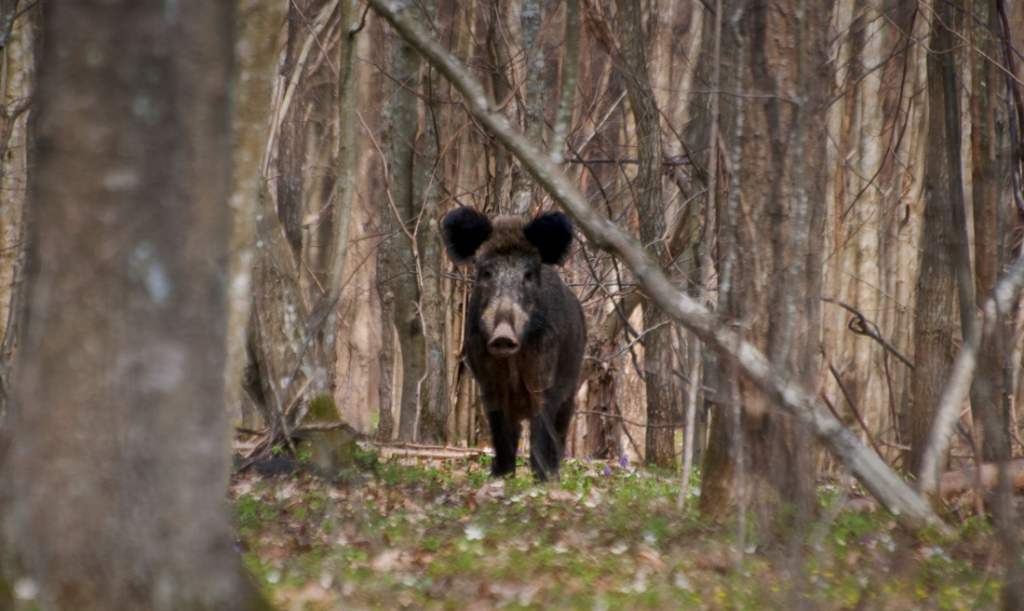
Source: Mammal Research Institute PAS.
eDNA-based sampling and analytic approach for integrated surveillance of wildlife-related pathogens
The environmental DNA (eDNA) pilot study in Croatia, Spain, and Portugal successfully tested a standardised approach for wildlife pathogen surveillance. By combining water and soil sampling, metabarcoding, and Nanopore sequencing, a significant increase in the detection of hosts and potential pathogens was achieved. The next steps for 2026 will focus on simplifying the analytical process, refining field protocols to prioritise hydro-topographical analysis, and formalising the integration of passive screening data for early warning and regulatory use within Integrated Wildlife Monitoring (IWM) programmes.
Upcoming events
Zagreb to host 14th international symposium on wild boar and other suids in 2026
The 14th International Symposium on Wild Boar and Other Suids will take place in Zagreb, Croatia from September 9–11, 2026. The event, held under the theme “Rooting towards the Future,” will gather researchers and wildlife managers to address key issues in suid ecology and management.
Hosted at the University of Zagreb Faculty of Agriculture, the scientific program will focus on topics including:
- African swine fever and other diseases.
- Biology and genetics.
- Ecology and behavioural ecology.
- Human-wildlife interactions and management policies.
Interview
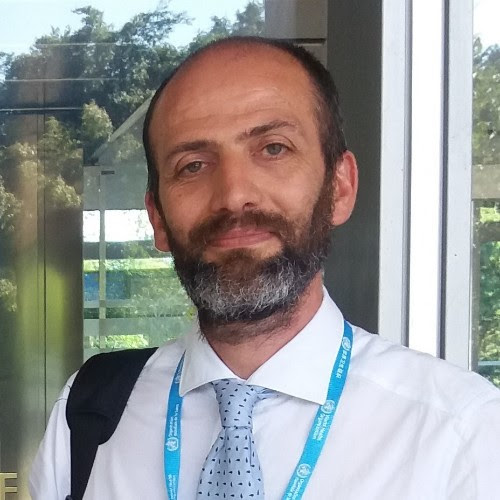
Relax and enjoy this interview with Paolo Tizzani, Senior Veterinary Epidemiologist at World Organisation for Animal Health, France, and Member of Enetwild’s advisory board
Could you start by telling us a bit about your role on the ENETWILD Advisory Board?
My expertise in information systems for epidemiological surveillance, and particularly epidemic intelligence and methodologies to improve disease reporting and surveillance, was recognised when I was selected to join the ENETWILD Advisory Board. As an example I was deeply involved in the redevelopment of the WOAH World Animal Health Information System (WAHIS) in the past, and I currently work within the WOAH Data Integration Department. This background and expertise enables me to offer valuable visions into ENETWILD’s data collection and harmonisation activities. Additionally, my experience working within an international organisation enables me to offer a broader perspective on how wildlife data can be better integrated into regional and global surveillance and risk assessment frameworks.
From your advisory perspective, what are ENETWILD’s most significant achievements to date?
One of ENETWILD’s most significant achievements has been the establishment of a network and framework for harmonised data collection. A major challenge when using data at global, regional or national levels is ensuring that datasets are interoperable and can effectively ‘speak to each other’. Without this, any attempt to obtain a comprehensive or comparative view of a phenomenon will always be biased. ENETWILD has made a significant contribution by addressing this issue, particularly in the context of wildlife population and disease surveillance, where data are often difficult to collect, standardise and harmonise.
“Avian influenza is one of the major emerging challenges for wildlife health.”
Looking forward, what are the biggest emerging challenges for wildlife health in Europe?
In my opinion, recent reports and surveillance data from European countries clearly show that avian influenza is one of the major emerging challenges for wildlife health. Since October 2025, the current seasonal wave has reached levels exceeding those observed in previous seasons within only a few months. At the same time, climate change is significantly altering the dynamics of many diseases, including those affecting wildlife. Changes in temperature, ecosystems and species distribution are likely to further complicate the emergence, persistence and spread of diseases in the coming years.
What are the key lessons from recent emergencies, like Avian Influenza (HPAI) in mammals?
In my opinion, one of the key lessons from avian influenza is that, even when we believe we have a good understanding of a disease’s epidemiology and dynamics, pathogens can still catch us unprepared. Disease systems are complex and continuously evolving, particularly at the interface between wildlife, livestock and humans. In this context, it is essential to improve and harmonise methodologies for monitoring wildlife populations and surveillance of diseases. Better data and stronger surveillance systems directly contribute to improved preparedness, earlier detection and more effective risk management.
What should be ENETWILD’s main contribution to tackling future challenges?
In my opinion, ENETWILD’s primary function should be to provide reliable and robust information to support risk assessment. All Too often, when a specific health threat emerges, information on wildlife populations and disease dynamics is either unavailable or highly uncertain. High-quality, standardised regional-level data on wildlife are particularly difficult to access and use. ENETWILD can play a crucial role in reducing this uncertainty and strengthening the evidence base required for informed decision-making.
“Better data and stronger surveillance systems directly contribute to improved preparedness”
In the end, what is the main legacy you hope ENETWILD will accomplish?
I think that ENETWILD could become a point of reference for other projects and initiatives that aim to standardise data. This is particularly important for One Health–related activities, where a key constraint, as highlighted by the Quadripartite One Health Intelligence Scoping Study among others, is the lack of data integration due to poor standardisation of data. By setting methodological standards and demonstrating their practical value, ENETWILD could have a long-lasting impact that would extend beyond the lifetime of the project itself.
In the end, what is the main legacy you hope ENETWILD will accomplish?
The health of wildlife is likely to become increasingly important in the future. Initiatives such as ENETWILD are therefore essential in order to address the critical gaps in our ability to manage the emergence of diseases at the intersection of humans, livestock, wildlife and the environment.
Many thanks.
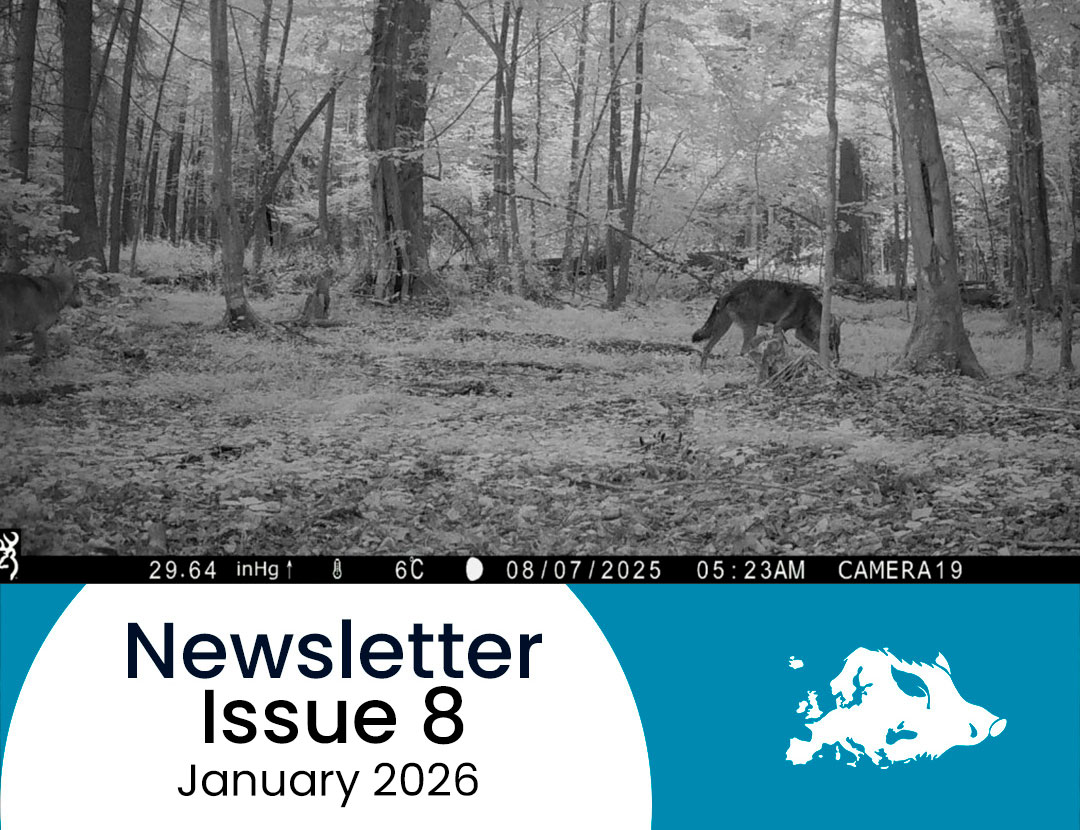
Let’s play “FIND THE MAMMAL”!
Reaching this far has its rewards. Here is the game:
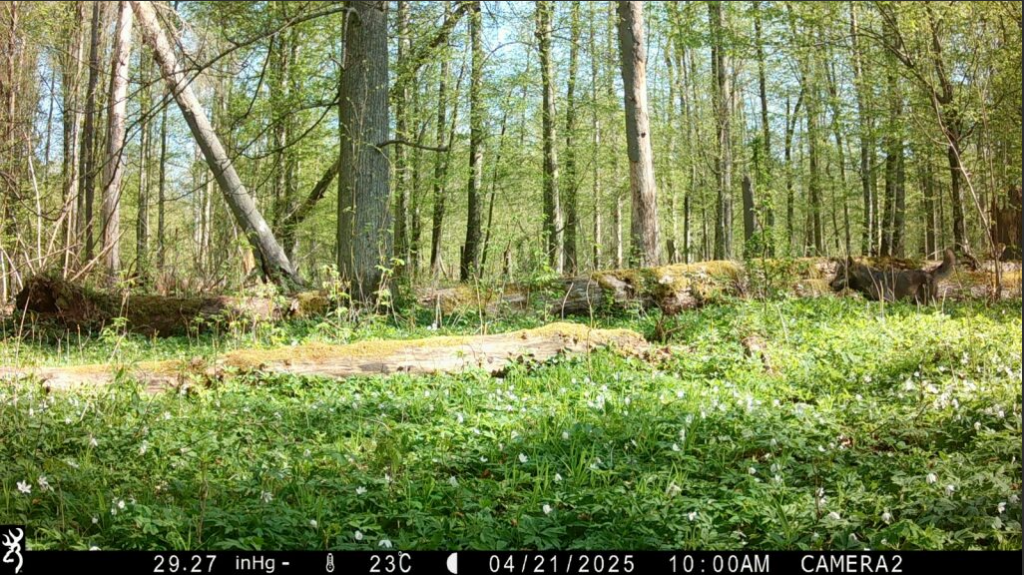
Taken with camera. Shows a Wolf (Canis lupus) in Białowieża Forest.
Photo credit: MRI PAS, European Observatory of Wildlife (EOW).